
Sub-Total: ₱0.00

The New Bambu Lab H2C is Revolutionizing 3D Printing yet again! Giving the makers and engineers what they want with their new Vortek System that lets us print up to 7 colors with minimal waste and lesser print time.
In this Blog, together we’ll be exploring the features and capabilities of the Bambu Lab H2C and find out whether it’s worth the buy. But one thing’s for sure, Bambu Lab creates these machines to cater hobbyists and professionals’ needs alike!
What's New?
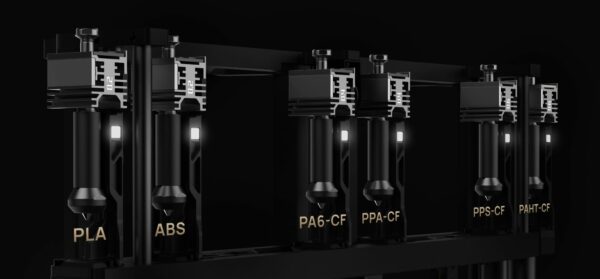
The H2C, Bambu Lab's first "tool-changer" style machine, was formally unveiled in November 2025.
Its unique feature is the revolutionary "Vortek Hotend Change System," which allows the printer to automatically switch between up to six inductively-heated hotends (plus one fixed nozzle) rather than re-purging a single nozzle every time you change materials or colors.
It allows for multi-material or multi-color prints in a single run with far less wasted filament when used in conjunction with the company's Automatic Material System (AMS).
Because of this, H2C represents a major advancement for 3D printing, particularly for users who need intricate, multi-material/color prints without the typical inconvenience or waste of filament changeover.
Specs & Capabilities
Additionally: the enclosure is ventilated and filtered (with pre-filter / HEPA / activated carbon) to allow use of materials that produce fumes.
Pros
Here's why the H2C stands out:
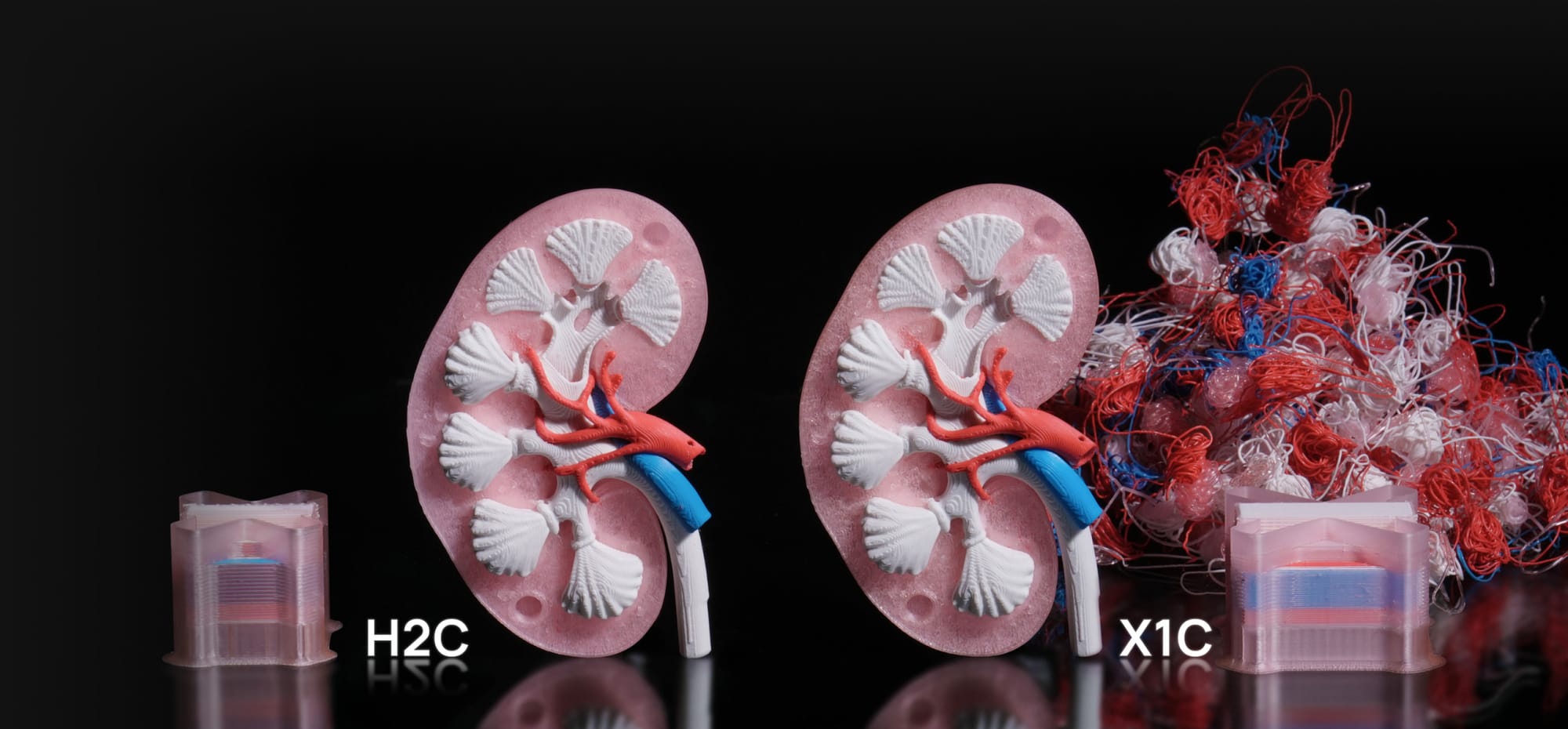
Prints involving multiple colors or materials – imagine intricate designs, prototypes, parts serving a purpose that blend firmness and flexibility, materials strengthened with a mix, or vibrant full-color prints achieved directly, bypassing the need for paint. With the tool-changer paired with AMS, managing this process is far simpler compared to older multi-material printers that only have one nozzle.
For engineering or specialized prints – it's great at handling engineering filaments that need high temperatures (think carbon fiber, glass fiber blends, and the like), making it a good choice for parts that do a job, mechanical pieces, prototypes ready for real-world use, and creations that mix different materials.
Work approaches that prioritize efficiency – ideal for those focused on cutting down waste, reducing how much you need to get involved by hand (like changing spools), or making prints quickly and reliably using automated features.
Experienced users, semi-professionals, or small businesses – given its sophistication and high-end features, the H2C appears geared towards serious enthusiasts, small manufacturing operations, design firms, or research and development, rather than beginners or casual users.
In online communities, some people are already utilizing the H2C for print jobs that once demanded either hand-applied paint or lots of work after printing to finish them – effectively turning complicated ideas with many colors into something achievable in one go.
Cons
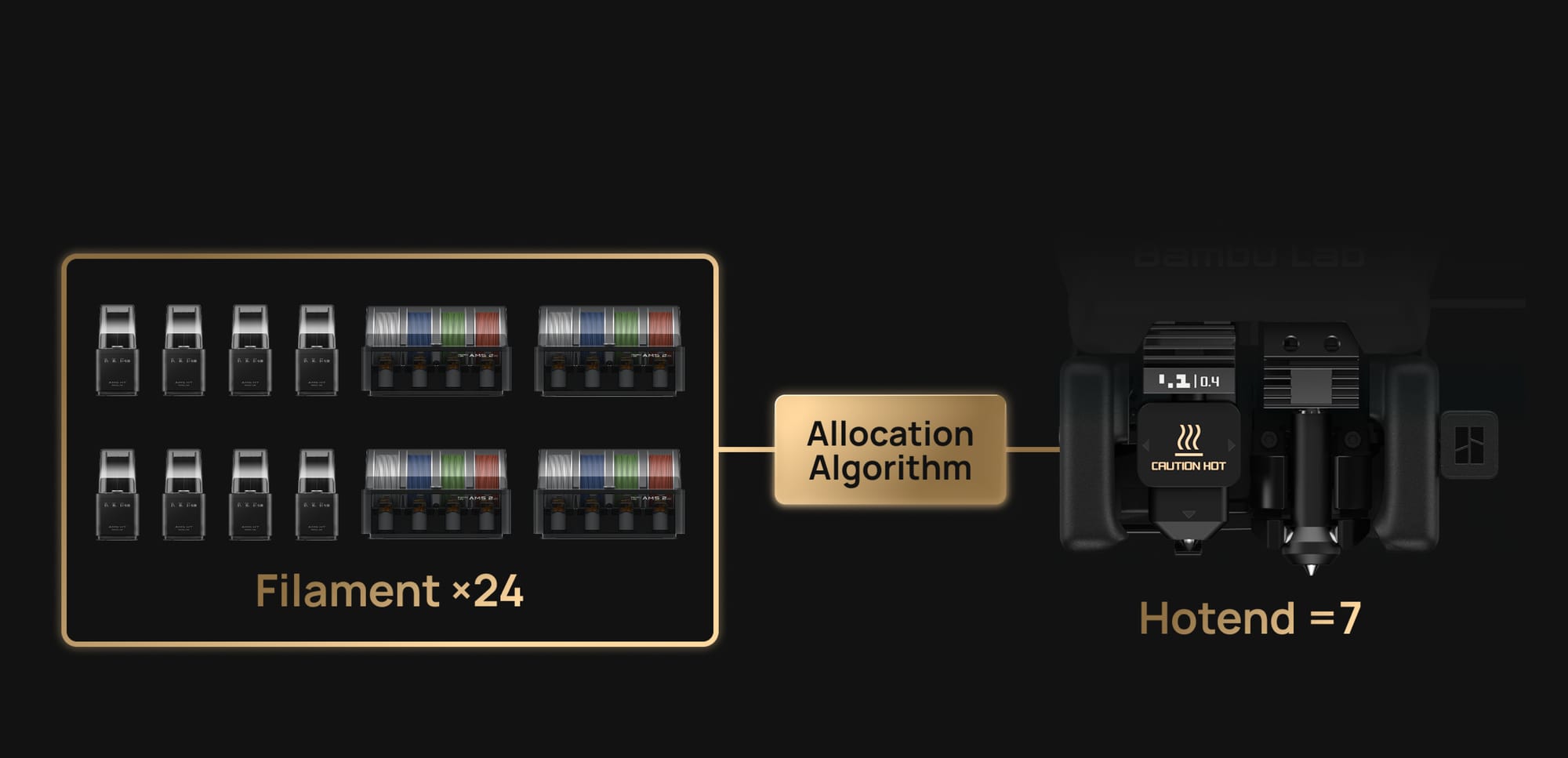
Even though H2C can swap tools, its function is still linked to the AMS setup. Initial assessments suggest that it runs more slowly than other printers specifically built to change tools, particularly when it comes to numerous nozzle changes.
Currently, the firmware demands that nozzles used have the same size across all active slots, which means that more experienced users should make sure that the nozzle sizes match for uninterrupted swapping.
There may be limitations for particular materials or configurations, for example, the compatibility of TPU with AMS, since a few users have inquired about this. These limitations are dependent on how filaments get loaded, especially if someone attempts to load through the "right" side, where the hot-end can be detached.
As is typical with more sophisticated printers, the added complexity results in a heavier maintenance workload, although H2C aims to automate many tasks, and the costs are greater when compared to simpler printer models.
Pricing, Availability and Support
A primary worry for purchasers in the Philippines when considering a new 3D printer is whether it's available locally, alongside local support services. Fortunately, Puzzlebox 3D, which is an officially recognized local distributor, provides Bambu Lab printers in the Philippines.
Puzzlebox 3D, being based in the Philippines, enables local clients to ask about product availability, place pre-orders, and understand the likely delivery schedules, thus avoiding the difficulties of international shipping, customs-related holdups, or warranties from abroad. This benefit is really crucial for a cutting-edge model such as the Bambu Lab H2C, which may have early releases in restricted quantities.
Since the supply can fluctuate based on worldwide stock levels, it's recommended to get in touch with your favorite supplier directly to learn about current availability, support and pricing.
As far as pricing is concerned, Bambu Lab positioned the H2C as a flagship product. The ability and technology of this machine is surely worth your hard-earned money. The H2C will be starting at a price of ₱171,899.00. If you're looking and in need for more features, such as the 10W and 40W variant, expect the price to be between ₱200,000 - ₱250,000. If that's still not enough machine for you and you can squeeze in a little more of your budget, you might want to consider the H2C Ultimate Set that includes an extra AMS 2 pro, an AMS HT, 3x Induction Hotend 0.4mm, a Regular Hotend 0.2mm, and a Regular Hotend 0.6mm. According to Bambu Lab, the H2C ultimate set will start at a price of $2,899 USD, however, there is no official announcement of its price in the Philippines.
Final Verdict
The Bambu Lab H2C isn't aimed at those just starting out, nor does it pretend to be. It targets experienced individuals seeking automated processes, rapid operation, and authentic multi-material or multi-color printing that eliminates the need for ongoing manual adjustments.
 Absolutely, it presents a worthwhile investment for professionals, enterprises, academic institutions, or dedicated hobbyists who prioritize effectiveness, dependability, and forward-thinking capabilities.
Opting to purchase via Puzzlebox 3D significantly boosts the H2C's practicality within the Philippine context, attributable to readily accessible local supply and assistance.
 It might not be the best option if budget constraints are a primary concern or if your printing needs are limited to fundamental PLA, 4 color models.
Bottom line:
Should you be in pursuit of an advanced 3D printer, coupled with the assurance of nearby accessibility and support within the Philippines, the Bambu Lab H2C—supported by Puzzlebox 3D— emerges as a robust, top-tier selection.
Want to Get your own H2C?

Register here and be the first to own one!
Sources: